
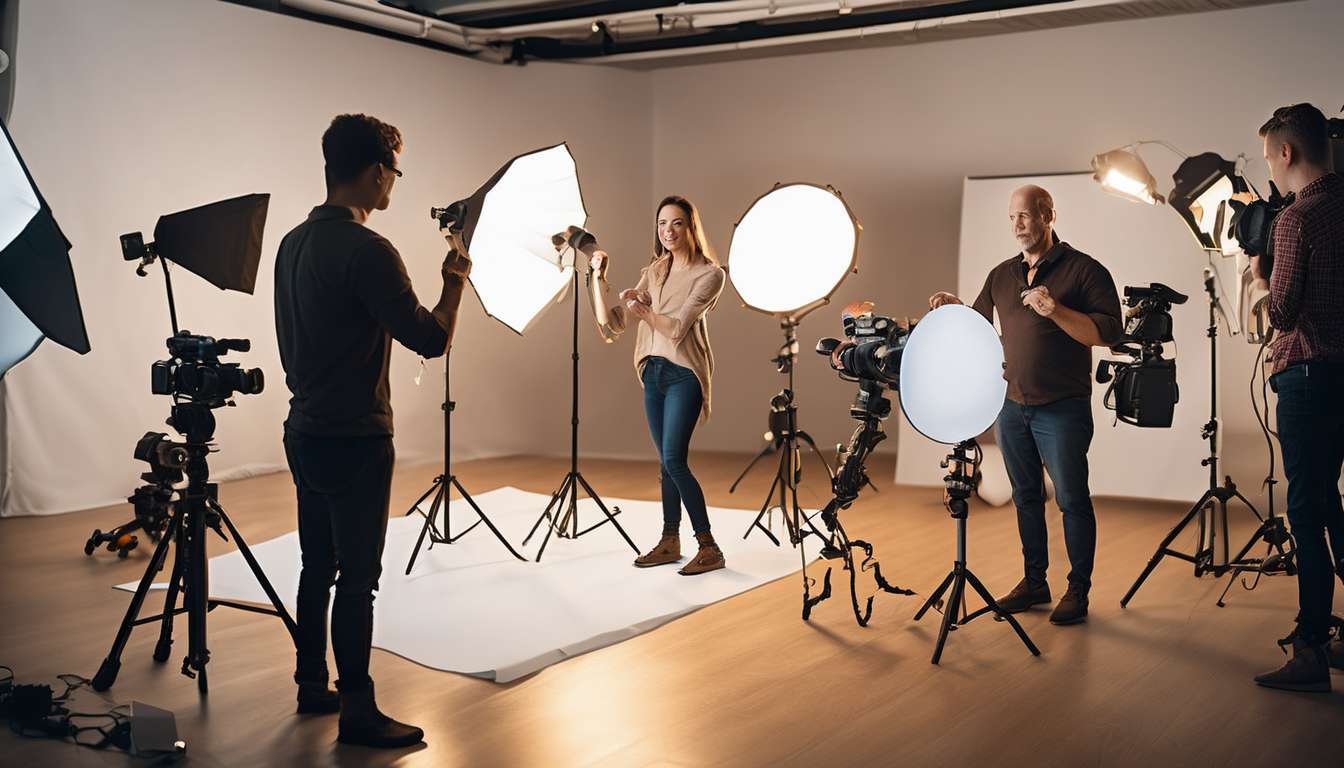
Common belief says adults with disabilities can’t thrive in fast-paced, detail-oriented photography studios — but we know otherwise.
We have seen colleagues with diverse abilities learn lighting setups, master camera settings, and guide clients with professionalism that rivals any commercial team.
As trainers and studio managers, we have witnessed how targeted professional training transforms hesitation into confidence.
This training creates workflows that honor both artistic standards and individual strengths.
Our teams use adaptive techniques, clear communication protocols, and role-specific skill-building to increase productivity and job satisfaction.
We challenge the myth by sharing practical strategies that blend accessible instruction with industry best practices.
- These strategies demonstrate how studios can become inclusive workplaces without sacrificing quality.
- They include training models, assessment tools, and documented success stories.
Investing in adult learners strengthens creative output, fosters collaboration, and expands opportunities for both photographers and participants alike.
Inclusive Training Principles
We will design training that centers accessibility, consent, and respect so every team member and client feels safe, represented, and empowered.
We build inclusive photography training that acknowledges varied bodies, identities, and comfort levels, and we practice tangible steps to make sessions equitable.
We teach adaptive equipment techniques so everyone can participate with dignity, including:
- adjustable rigs
- accessible seating
- lighting setups that accommodate mobility and sensory needs
We practice clear client interaction protocols, including:
- consent check-ins
- using preferred language
- private cues to pause or stop
We create scenarios for staff rehearsal so team members can practice:
- welcoming language
- boundary-respecting positioning
- confidentiality habits
We provide constructive, specific feedback after rehearsals to reinforce learning and skills.
We center co-creation with clients, inviting preferences for:
- styling
- poses
- pacingso collaborators feel like authors of their images.
We document procedures and make materials available in multiple formats, and we commit to ongoing review with input from team members and clients.
We measure success by:
- trust
- repeat bookings
- a workplace where everyone feels they belong and can do their best work
Role-Based Skill Plans
We’ll map clear, role-specific skill plans that outline responsibilities, required competencies, and progressive training milestones for photographers, assistants, producers, and front-of-house staff.
We’ll define core competencies for each role so everyone knows how they contribute and grows together.
For photographers we’ll focus on:
- composition
- lighting judgment
- collaborative decision-making
For assistants we’ll focus on:
- setup
- workflow support
- safety checks
For producers we’ll focus on:
- scheduling
- consent practices
- client experience design
For front-of-house staff we’ll focus on:
- welcome routines
- efficient handoffs
We’ll integrate inclusive photography training into every plan so team members learn to respect varied bodies, identities, and communication styles.
We’ll include client interaction protocols that model empathy, clear consent language, and accessible scheduling.
We won’t cover device-specific details here, but we’ll reference adaptive equipment techniques in role expectations so staff know when to call specialists.
Each plan will list measurable milestones, mentoring checkpoints, and peer-review moments so people feel seen, supported, and part of a dependable, growing team.
Adaptive Equipment Techniques
We outline practical techniques for using and adapting equipment so team members can confidently support clients with mobility, sensory, or dexterity differences.
We practice inclusive photography training that centers safety, dignity, and clear steps for set-up and break-down.
We show how to modify stands, mounts, and seating to secure posture without restricting movement, including:
- Adjusting height and angle ranges for easy, single-handed use.
- Adding padding or lateral supports for comfort and stability.
- Quick-lock mechanisms so adjustments can be made safely during a session.
We show how to fit grips, straps, or adaptive remotes for clients with limited dexterity, including:
- Variety of grip sizes and textures for different hand shapes.
- Strap and brace options that secure devices without causing pressure points.
- Adaptive remotes (large buttons, switches, or foot/voice alternatives) and how to configure them.
We include tactile markers, adjustable lighting angles, and diffused sounds to reduce sensory overload while preserving creative choices.
- Tactile markers for touch-based orientation of controls and props.
- Adjustable lighting with softboxes, diffusion panels, and rotatable mounts to control contrast and glare.
- Sound control (low-volume cues, directional speakers, and gentle ambient sound) to keep audio cues clear but non-intrusive.
We document standardized procedures so teammates can replicate adjustments quickly and consistently, aligned with client interaction protocols that respect consent and personal preferences.
- Pre-session equipment checklist and client preference intake.
- Step-by-step adjustment guide per common mobility/sensory/dexterity need.
- Client consent script and privacy/respect reminders.
We train on transferring and positioning tools safely, plus sanitizing and storing adaptive gear.
- Safe lifting and transfer techniques for gear and clients when applicable.
- Cleaning protocols for straps, grips, and shared surfaces (approved disinfectants, drying times).
- Organized storage with clear labeling and quick-access staging areas.
We run hands-on drills and scenario-based practice so everyone gains muscle memory and confidence.
- Short drills for common adjustments (3–5 minute practice stations).
- Full mock sessions including client interaction and equipment break-down.
- Role-play for consent conversations and on-the-fly preference changes.
We debrief after sessions to refine techniques and update checklists, ensuring our studio stays welcoming, competent, and reliably prepared to include every client.
- Post-session notes logged to a shared folder.
- Regular review meetings to incorporate feedback and update training materials.
- Versioned checklists and quick-reference cards kept in the studio for on-demand use.
Communication Protocols
We will establish clear, consistent communication protocols that prioritize consent, comfort, and efficient coordination among team members and clients.
We will outline verbal and nonverbal cues, use plain language, and set expectations before sessions so everyone feels seen and safe.
Our inclusive photography training will cover tone, timing, and pacing of directions to ensure we invite participation rather than demand compliance.
We will create checklists and short scripts for introductions, positioning, and transitions that respect boundaries and accommodate individual needs shaped by adaptive equipment techniques.
- Examples of checklists and scripts:
- Pre-shoot introduction script that includes consent reaffirmation and preferred pronouns.
- Positioning prompts that use simple, layered instructions (e.g., “Feet first, then shoulders, then chin”) to reduce cognitive load.
- Transition phrases to signal movement between poses or activities.
We will agree on simple, clear signals for moments that need immediate attention, including hand signals, a stop word, and a debrief phrase.
- Standard signals:
- Hand signal for “pause” or “hold” when verbal communication is difficult.
- A designated stop word for immediate pauses (e.g., “Pause” or a pre-agreed safe word).
- A debrief phrase to confirm comfort after poses (e.g., “Comfort check?”).
Client interaction protocols will include consent reaffirmation, recording preferred pronouns, and noting sensory preferences in client profiles.
- Client profile items:
- Consent status and any limits or boundaries.
- Pronouns and name preferences.
- Sensory preferences (lighting, touch, sound) and any adaptive equipment needs.
We will schedule brief team huddles before and after shoots to align on roles, changes, and client needs.
We will document communication norms and update them collaboratively so staff and clients alike feel they belong to a studio culture of respect, clarity, and responsive care.
Assessment and Feedback
We use regular, structured assessments and timely feedback to track skill development, reinforce strengths, and address gaps in technique, safety, and client communication.
We evaluate technical abilities, inclusive photography training outcomes, and comfort with adaptive equipment techniques through practical tests and observed sessions.
Feedback is specific, action-oriented, and delivered in safe one-on-one settings so everyone feels supported and part of the team.
We measure adherence to client interaction protocols with role-plays and real-client debriefs, noting what went well and what needs adjustment.
We set clear, measurable goals and revisit them in short cycles so progress is visible and celebrated.
Peer review and self-assessment are built into our routine, encouraging mutual support and shared ownership of improvement.
When gaps appear, we provide targeted coaching, quick practice drills, or resource recommendations.
By keeping assessments transparent, consistent, and tied to real studio tasks, we cultivate competence, belonging, and accountability without judgment, ensuring every team member can grow confidently and contribute their best to our inclusive studio environment.
Workflow Integration Strategies
Embed training and safety into everyday studio workflows so learning and accommodation happen naturally during real shoots.
Design clear station checklists that integrate inclusive photography training moments.
- Brief prompts remind team members to confirm accessibility needs.
- Brief prompts remind team members to adjust lighting for diverse skin tones.
- Brief prompts remind team members to note adaptive equipment techniques required for each session.
Sequence tasks so skill refreshers occur at low-stakes times: setup, gear handoffs, and wrap.
Standardize labeling, storage, and quick-access guides for adaptive gear.
- Label ramps, mounts, and modified grips clearly.
- Store adaptive gear in fixed, easy-to-reach locations.
- Provide quick-access guides so adaptive gear use becomes second nature.
Map decision points where client interaction protocols fit smoothly into the shoot flow.
- Include consent confirmation steps.
- Capture positioning preferences.
- Perform comfort checks without diverting focus.
Run timed mock shoots to practice flow and troubleshoot friction points.
- Collect short debriefs after each mock to refine procedures.
- Use findings to update checklists and guides.
Encourage cross-training so every team member can step in.
- Foster belonging and shared responsibility.
- Reduce single-point dependencies for accessibility tasks.
Result: These strategies make inclusive practice operational, efficient, and welcoming across the studio.
Client Interaction Training
Training goal: We’ll train our team to communicate clearly, confirm consent and comfort, and adapt our approach to each client’s needs throughout every session.
Practice philosophy: We practice inclusive photography training that centers respect, privacy, and collaborative decision-making so every person feels seen and safe.
Client interaction protocols: We teach protocols that set expectations, including:
- Introductions.
- Regular check-ins.
- Clear consent language.
- Agreed signals for pauses or changes.
Skills-building through role-play: We role-play scenarios to build confidence, using real dialogue templates and feedback loops that normalize asking questions and honoring boundaries.
Adaptive equipment training: We introduce adaptive equipment techniques so team members can suggest and operate supports—posers, mounts, or lighting modifiers—without making clients feel othered.
Nonverbal communication: We emphasize body language, tone, and pacing that match individual comfort, and we document preferences to create continuity across visits.
Peer learning and improvement: We encourage peer coaching and debriefs after shoots to refine communication and technical choices.
Outcome: By committing to these practices, we create a studio culture where belonging, dignity, and high-quality images go hand in hand.
Measuring Success Outcomes
We’ll track measurable indicators—like client satisfaction scores, consent-comfort check frequencies, retention rates, and image-quality reviews—to judge whether our communication practices are working and where to improve.
We’ll gather quantitative and qualitative data after each session so the whole team feels seen and responsible for outcomes.
We’ll analyze training and technique outcomes by comparing results from inclusive photography training modules alongside feedback on adaptive equipment techniques to ensure accessibility isn’t just taught but practiced and validated.
We’ll audit adherence to client interaction protocols through spot-checks and reflective debriefs, sharing findings in safe, solution-focused meetings.
When metrics dip, we’ll co-create targeted responses:
- Identify gaps through data and staff input.
- Design refreshers or adjust equipment and techniques.
- Make clear action plans with timelines and owners.
- Reassess and iterate after implementation.
We’ll celebrate improvements and recognize contributors to reinforce belonging and shared purpose.
We’ll report trends to stakeholders with transparent summaries and practical recommendations:
- Use clear, simple language.
- Highlight concrete next steps.
- Include timelines and responsible parties.
By connecting measurable outcomes to concrete steps, we’ll continuously refine our practices so clients and team members reliably experience respectful, competent, and inclusive studio sessions.
What are the legal and liability considerations for photographing adults with disabilities, and do team members need special certifications or waivers?
Legal and liability concerns when photographing adults with disabilities: consent, capacity, and privacy
Informed consent and releases tailored to capacity
- Obtain signed informed consent or release forms whenever possible.
- When capacity is uncertain, use a tailored approach: plain-language forms, visual aids, and extra time for decision-making.
- Document assessments of capacity and the steps you took to support decision-making.
Respect power dynamics and document decision-makers
- Recognize that power imbalances (photographer-client, institutional settings) can influence consent.
- Record who made the decision (the adult, a legally authorized representative, or a supported decision-maker) and why that choice was appropriate.
- Keep written records of conversations, explanations given, and alternatives offered.
Follow accessibility and anti-discrimination laws
- Comply with applicable laws (e.g., ADA in the U.S., equivalents elsewhere) regarding equal access, reasonable accommodations, and non-discrimination.
- Provide accommodations for communication, mobility, and sensory needs during consent and the shoot.
Privacy, data security, and image handling
- Secure storage and transmission of images and personal data (encrypted storage, limited access).
- Specify permitted uses and sharing in the release: editorial, commercial, social media, portfolio, third-party licensing, etc.
- Establish retention, deletion, and access policies consistent with privacy laws and the consent given.
Liability insurance and risk management
- Carry appropriate liability insurance that covers photography activities, including on-location shoots and working with vulnerable adults.
- Conduct risk assessments for shoots and follow health/safety protocols.
Team training and qualifications
- Team members typically do not need special certifications, but should receive training on:
- Communication techniques with people with various disabilities.
- Consent and capacity best practices.
- Safeguarding and de-escalation.
- Maintain records of training completed.
Waivers and legal review
- Use clear, specific waivers/releases that describe scope, duration, and permitted uses.
- Avoid broad or ambiguous language; ensure they are understandable to the person signing.
- Have templates legally reviewed and adapted to local law.
Practical documentation practices
- Keep copies of signed releases, capacity assessments, notes on accommodations provided, and logs of who accessed images.
- Time-stamp and secure versions to demonstrate compliance if questions arise.
When to consult counsel or specialists
- Consult an attorney for complex capacity questions, use of images for commercial purposes, or cross-jurisdictional shoots.
- Engage accessibility specialists or advocates when designing consent processes for specific communities.
If you’d like, I can:
- Draft a plain-language consent form template with accommodations options.
- Create a checklist for documenting capacity and decision-makers.
- Suggest sample language for permitted uses and data retention.
How should a studio handle insurance coverage, incident reporting, and emergency medical responses specific to adaptive sessions?
We’ll review insurance to confirm adaptive-session coverage, add liability riders for specialized equipment, and verify staff are listed as insured.
We’ll document incidents immediately with a clear report form, preserve photos and statements, and notify insurers promptly.
We’ll train everyone in basic first aid and emergency protocols, keep signed medical-release permissions, and establish preferred-care contact lists so we’re ready to respond calmly and supportively during any medical situation.
What are best practices for billing, pricing, and invoicing when sessions require extended time, additional staff, or specialized equipment?
Goal: Set fair billing, pricing, and invoicing when sessions require extra time, staff, or gear.
Create clear tiered rates.
- Define standard session lengths and base rates.
- Add explicit tiers for overtime (e.g., per 15- or 30-minute increment) and for different staff roles (e.g., lead practitioner vs. assistant).
- Publish rates in writing so clients and staff know expectations.
Communicate add-ons upfront.
- List common add-ons (extra staff, specialized equipment, travel, setup/breakdown time).
- Include approximate costs and when they apply.
- Provide written estimates before the session whenever possible.
Obtain written consent for extended sessions or changes.
- Ask clients to sign consent forms or email approvals for extensions or unplanned add-ons.
- Record verbal approvals in client notes with time, date, and the approver’s name.
Itemize charges on invoices.
- Break out base fee, overtime, staff fees, gear rental, travel, and any taxes or surcharges.
- Show discounts or adjustments separately with a short reason.
- Include session date(s), hours, and a clear total due.
Offer packages, sliding scales, or alternatives.
- Create bundled packages that anticipate common add-ons (e.g., extended session + assistant included).
- Offer a sliding scale or capped-fee options for clients with limited means, documented in policy.
- Provide lower-cost alternatives (shorter session, remote consult) when appropriate.
Document discounts and concessions.
- Record who approved a discount, why, and any conditions (e.g., one-time courtesy).
- Use consistent internal codes or notes on invoices to preserve transparency.
Invoice promptly and provide easy payment options.
- Send invoices immediately after the session or on a fixed schedule.
- Include multiple payment methods (card, bank transfer, online pay links) and clear due dates.
- State late fees or grace periods in advance.
Review pricing and policies regularly with clients and staff.
- Hold periodic reviews to assess fairness, inclusivity, and staff workload.
- Update written policies and notify clients of changes with advance notice.
- Solicit feedback to ensure transparency and trust.
Outcome: By formalizing tiered rates, communicating add-ons, obtaining written consent, itemizing invoices, offering flexible options, documenting discounts, and reviewing policies regularly, you maintain fairness, inclusivity, and trust in billing and pricing when sessions require extra time, staff, or gear.
Conclusion
You’ve built a training program that’s practical, inclusive, and focused on real studio needs.
Use role-based plans to tailor training to specific job functions so each team member learns the skills they actually need.
Teach adaptive equipment techniques to ensure staff can operate assistive tools and modify setups for clients with different needs.
Establish clear communication protocols so interactions between staff and clients are consistent, respectful, and efficient.
Implement regular assessment to monitor skills and confidence, identify gaps, and guide refresher training.
Train teams on client interactions and measure outcomes so you can refine practices continuously.
Keep learners involved, gather feedback, and iterate—collect participant input, act on it, and update the program to improve effectiveness.
These steps will help your studio deliver consistent, accessible, high-quality photography services and improve over time.